Best Free Coding Resources for Beginners (2025 Guide)

I learned to code mostly with free resources. The trap wasn’t lack of material—it was jumping between courses without finishing anything. This guide is a short list of free resources that actually work, plus how to use them so you build skills instead of a bookmark folder.
Free coding resources in 2025 are plentiful: official docs, interactive courses, and practice platforms can take you from zero to portfolio-ready. The catch is choosing a small set and sticking with it. This article is objective: it recommends types of resources and concrete examples, with trade-offs so you can pick a path that fits your style and time.
Use Official Documentation as Your Anchor

The best free resource for any language or framework is usually its official documentation. MDN (Mozilla Developer Network) for HTML, CSS, and JavaScript is accurate, up to date, and free. React, Vue, and other frameworks also have strong docs and “Learn” sections that double as structured tutorials.
Why docs first:
- Accuracy: No outdated video or third-party summary; you get the current API and recommended patterns.
- Depth: When you’re stuck, the docs are the source of truth for syntax and behavior.
- Free: No paywall, no trial limits.
Concrete example: For front-end, start with MDN’s “Getting started with the web” and “JavaScript first steps.” Then use the React docs “Learn React” section (or Vue/Svelte equivalents). One doc-based path plus one project is enough to get to “I can build a small app.”
For a clear sequence once you’re writing code, our how to become a front-end developer guide ties learning order to projects and job readiness.
Add One Structured Course or Interactive Platform

If you learn better with step-by-step lessons, pick one free course or platform and complete it instead of sampling five. FreeCodeCamp, The Odin Project, and CS50 (Harvard) are often recommended: they’re free, structured, and include projects. Interactive platforms like Codecademy have free tiers that cover basics.
5-step “resource diet” so you don’t overload:
- Choose one primary path (e.g. “MDN + React docs” or “The Odin Project front-end track”).
- Set a finish goal (e.g. “Complete the first 3 modules” or “Build the first project in the curriculum”).
- Do not start another course until that goal is done.
- Build one small project that isn’t from the course (your own idea or a clone).
- Only then add a second resource (e.g. a different topic or a practice site).
Trade-off: one completed path beats three half-finished ones. Employers care what you can build, not how many tutorials you’ve started.
Practice With Coding Challenges and Small Projects
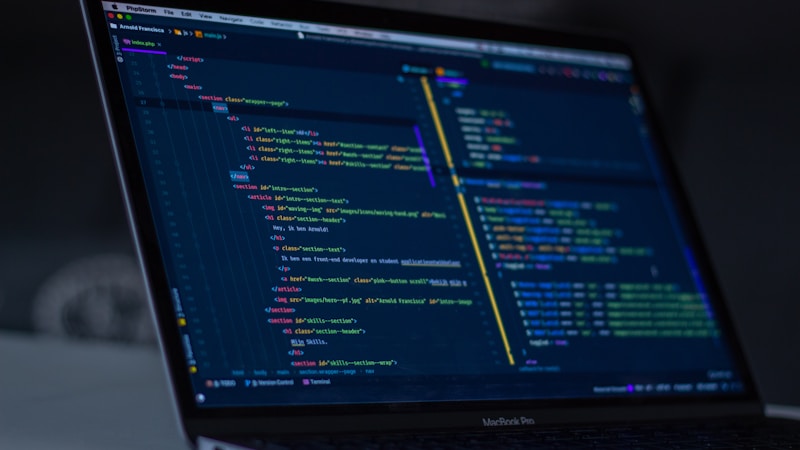
Practice platforms (e.g. free tiers of LeetCode, Codewars, or front-end focused ones like Frontend Mentor) give you problems and sometimes community solutions. Use them to reinforce logic and language syntax, but don’t let them replace building real apps. The best “practice” is still a project that runs in the browser and does something useful.
What to mix:
- Algorithm-style: A few problems a week if you’re targeting companies that use them in interviews. Focus on Easy and a few Medium; don’t grind hundreds.
- Front-end challenges: Sites that give you a design or spec and you build it. Good for CSS and layout.
- Your own projects: Even a small “link in bio,” todo app, or API-powered page counts. Ship it and put it on your portfolio.
Checklist for “practice that pays off”:
- You can explain your solution or your project in 1–2 minutes.
- Code is in a repo (or live) so you can show it.
- You’re spending at least as much time building as watching or reading.
Stay Updated Without Chasing Every New Tool
New frameworks and tools appear constantly. For beginners, “staying updated” means getting solid in one stack (e.g. HTML, CSS, JS, one framework) and then adding new things slowly. Follow one or two blogs or newsletters; skim release notes for your main stack. Don’t switch frameworks or build tools every month.
Practical rule: Master the fundamentals and one framework first. After you’ve built 2–3 projects, then explore a second framework or a new tool. Depth then breadth.
Summary: the best free coding resources for beginners are official docs (e.g. MDN, framework docs), one structured course or track you actually finish, and practice through small projects. Limit yourself to one main path until you ship something, then expand. That’s how you avoid tutorial overload and get to portfolio-ready.
If I could give one tip: treat “finishing” as the goal. One completed course or doc track plus two projects you can show will beat a dozen bookmarked tutorials every time.
FAQ
Q. Are free resources enough to get a job?
Yes, for many front-end and junior dev roles. What matters is what you build and can demonstrate—not whether you paid for a bootcamp. A strong portfolio from free resources is enough if it shows real projects and clean code.
Q. How do I avoid tutorial hell?
Set a rule: for every 2–3 hours of tutorials or courses, do at least 1 hour of building something that isn’t a copy-paste from the tutorial. Finish one path before starting another. “Build more, watch less” is the mantra.
Q. Which free course should I pick first?
For web/front-end: The Odin Project or freeCodeCamp’s front-end track are popular and free. Alternatively, MDN + React (or Vue) docs. Pick one, commit to the first 2–3 modules or first project, and don’t switch until you’re done.
Related keywords
- free coding courses for beginners
- best free programming resources 2025
- learn to code free online
- MDN web development tutorial
- The Odin Project vs freeCodeCamp
- free JavaScript course
- coding practice for beginners
- avoid tutorial hell programming